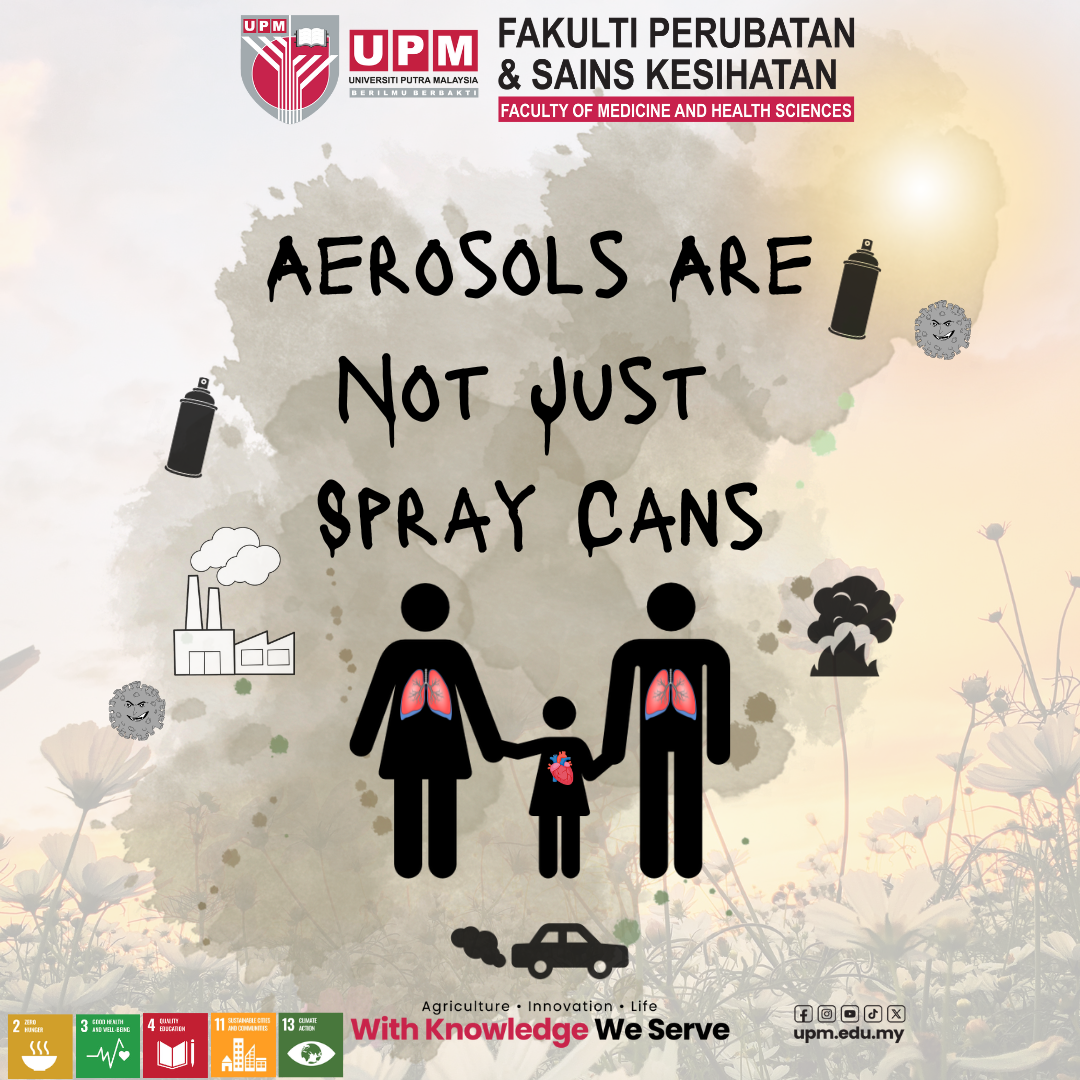
Dispelling the Myth: Aerosols Are Not Just Spray Cans
When people hear the word “aerosol", they often think of household spray cans like bug repellents, deodorants, hair sprays, or cleaning products. While these are indeed aerosols, they represent just one type of aerosol. Aerosol spray cans use a specific technology to disperse liquid particles in a fine mist using a propellant gas. The liquid inside the can is forced out as tiny droplets, creating a mist or spray. However, aerosols encompass a much broader category of tiny particles or droplets suspended in the air. These can be solid particles, liquid droplets, or a mixture of both. Aerosols in the air can come from natural sources like dust, pollen, sea salt from ocean spray, and smoke from wildfires. They can also come from human activities, such as vehicle exhaust, industrial emissions, and the burning of fossil fuels.
Understanding the full scope of aerosols is important because they play significant roles in both environmental and health issues. For instance, fine particulate matter (PM2.5) from pollution can penetrate deep into the lungs and even enter the bloodstream, causing respiratory and cardiovascular diseases. The COVID-19 pandemic highlighted their role in virus transmission, as aerosols can carry respiratory droplets containing viruses. Additionally, aerosols impact food security by depositing pollutants on crops and causing acid rain, which harms agriculture. Moreover, aerosols can influence the climate by reflecting sunlight back into space or absorbing it, which can either cool or warm the atmosphere. They also affect cloud formation, which impacts weather and climate patterns.
Addressing aerosol-related issues is integral to achieving several Sustainable Development Goals (SDGs). Reducing harmful aerosols is crucial for SDG 3 (Good Health and Well-being) as it improves public health by decreasing respiratory and cardiovascular diseases. Managing aerosol emissions is vital for SDG 13 (Climate Action) because it helps mitigate the effects of climate change. Protecting crops from pollution supports SDG 2 (Zero Hunger) by ensuring food security and enhancing agricultural productivity. Furthermore, improving air quality aligns with SDG 11 (Sustainable Cities and Communities) by contributing to healthier, more sustainable urban environments. Recognising and addressing the broad impact of aerosols is essential for creating a healthier and more sustainable future.
Remember, aerosols are more than just what comes out of a spray can! Understanding the full scope of aerosols helps us address important health and environmental challenges.

Dr. Nur Faseeha Suhaimi
Senior Lecturer
Department of Environmental and Occupational Health
Faculty of Medicine and Health Sciences, Universiti Putra Malaysia
Date of Input: 07/08/2024 | Updated: 09/08/2024 | nadia_rahman
MEDIA SHARING






.png)
.png)