Hand in Hand for Better Foods and a Better Future
Imagine the comforting aroma of freshly cooked rice, the warmth that evokes memories of home, love, and belonging. Food is more than physical sustenance; it is a symbol of care and humanity that unites people across the world. It transcends culture and language, connecting us through gratitude, empathy, and compassion. Yet behind the abundance we often see, there remain many who struggle daily to access sufficient, safe, and nutritious food. The right to food is not a privilege, it is a fundamental human right, one that upholds dignity, health, and life itself.
According to the Food and Agriculture Organization (FAO, 1996), food security exists when all people, at all times, have physical, social, and economic access to sufficient, safe, and nutritious food that meets their dietary needs for an active and healthy life. In Malaysia, the national food ecosystem remains challenging, especially in the face of climate change, global market volatility, and the imbalance between supply and demand. To address these challenges, Malaysia has launched the National Agrofood Policy 2.0 (NAP 2.0) and the Food Security Policy Action Plan 2021–2025, which emphasize the mobilisation of natural resources, human capital, research and development, and technology towards a more sustainable and resilient food system, in alignment with the Zero Hunger (SDG 2) goal.
Food loss remains a critical challenge, particularly for perishable produce such as fruits and vegetables, due to production, storage, and transportation constraints. Globally, around 13.2% of food produced is lost between harvest and retail, while an estimated 19% of total global food production is wasted in households, food services, and retail combined. This not only reduces food availability but also wastes vital resources, while contributing to greenhouse gas emissions and climate change.
At the same time, the rising cost of achieving a healthy diet, especially among low-income households, alongside the growing prevalence of obesity and non-communicable diseases, underscores that food security extends beyond availability to include affordability, choice, and awareness. Addressing these challenges requires practical and sustainable actions, such as encouraging communities and households to cultivate fast-yielding vegetables and herbs at home. A simple yet powerful step toward enhancing food resilience, reducing waste, and building a more sustainable and self-sufficient food system.
In response, Malaysia also has strengthened efforts through national initiatives such as the Agenda Nasional Malaysia Sihat (ANMS), which promotes healthier living, the Healthier Choice Logo (HCL) to guide consumers in making informed dietary decisions, and the BeSS Programme (Clean, Safe, and Healthy) to improve food quality and safety at the community level. Together, these programmes advance a national movement towards nutritional literacy and responsible food consumption.
As a leading institution in agriculture, food, and health sciences, Universiti Putra Malaysia (UPM) rises to the challenge through its UPM Food Security Blueprint, a strategic commitment to drive Malaysia’s food security agenda and strengthen its global presence. UPM’s role extends beyond research and innovation; it is a catalyst for change that bridges knowledge, communities, and policies through sustainable, practical solutions. With expertise spanning nutrition, food science, agriculture, and biotechnology, UPM is well-positioned to lead transformation from laboratory to farm, from research to policy, and from innovation to the nation’s plate.
In the face of today’s global challenges, World Food Day 2025, celebrated on 16th October reminds us that food is not merely about production and trade, but deeply intertwined with humanity, social justice, and the sustainability of our planet. Food is a right, not a privilege; ensuring that right is fulfilled is our shared responsibility as individuals, communities, and nations. With the theme “Hand in Hand for Better Food and a Better Future,” this year’s celebration calls on us to reflect on our roles: are we merely passive consumers, or active contributors to a fairer, more inclusive, and more sustainable food system?
Just as food brings us together at the table, let it also unite us in a humanitarian mission, to ensure that no one is left behind in the right to enjoy safe, nutritious, and meaningful food. Not only for today, but for the generations to come. Together, hand in hand and with a shared purpose, we can create a world free from hunger and one that is healthier and more prosperous for all.
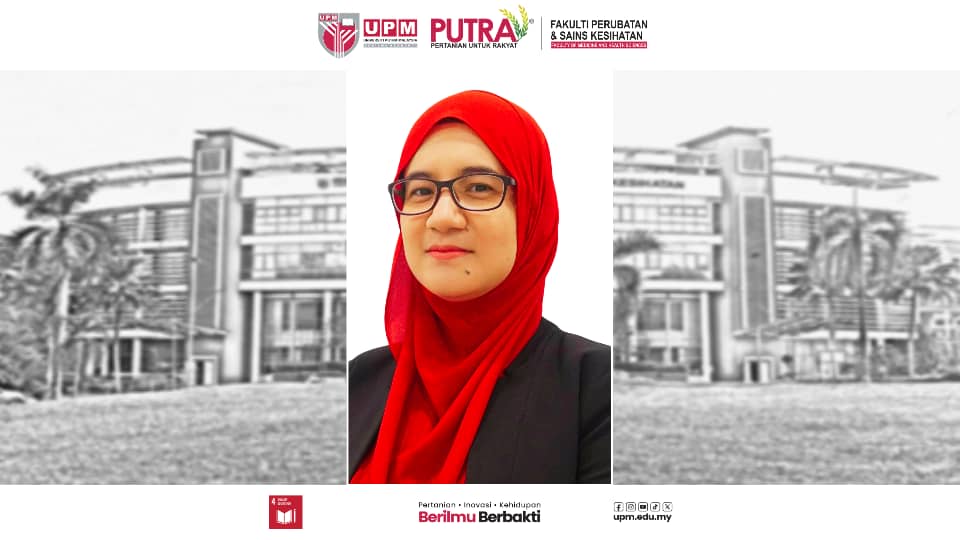
Dr. Siti Raihanah Shafie
Senior Lecturer, Nutrition Expertise Related to Chronic Diseases, Functional Foods
Department of Nutrition
Faculty of Medicine and Health Sciences
Universiti Putra Malaysia
sitiraihanah@upm.edu.my
Date of Input: 16/10/2025 | Updated: 17/10/2025 | nadia_rahman
MEDIA SHARING





.png)
.png)