SUBTLE TACTICS, REAL THREATS
At a playground, Maurice and his friends were playing. However, unbeknownst to them, the sweet aroma of strawberries from the puffs of vape smoke being inhaled by a group of teenagers caught their attention. In fact, the colorful designs and fruity flavors of the modern tobacco products attracted them. Unfortunately, this is an example of how the tobacco industry's subtle tactics continue to lure children.
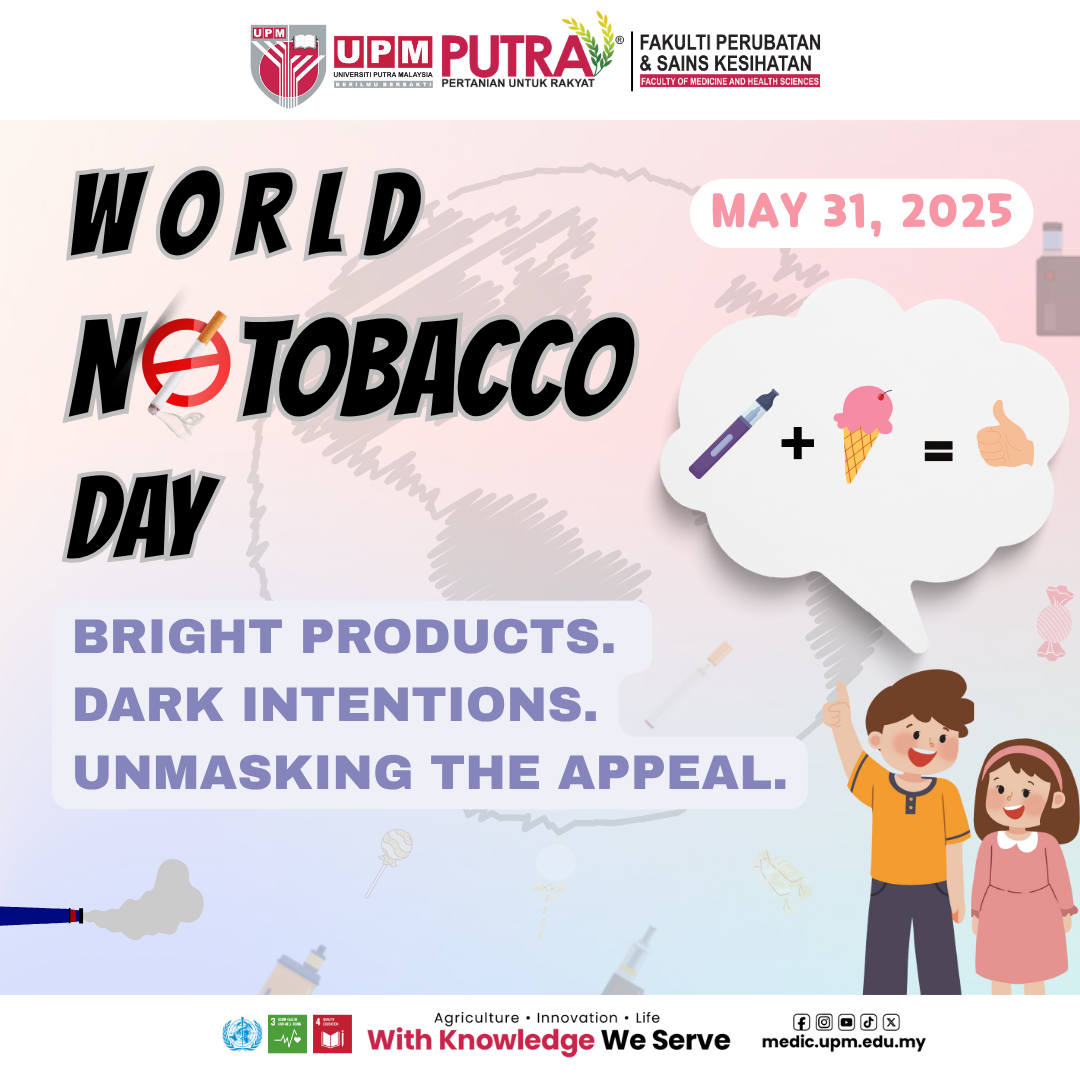
Every year on May 31, the world celebrates World No Tobacco Day. In 2025, WHO and public health advocates around the world have come together to expose the cunning tactics used by the tobacco and nicotine industries. Subtle marketing strategies, attractive design features and the use of flavors such as fruit and chocolate make these products appear harmless and even enjoyable, especially to children and adolescents.
The tobacco industry is no longer just selling regular cigarettes. They are introducing new products such as vapes and heated tobacco products. Vapes, for example, use liquids containing propylene glycol (PG), vegetable glycerine (VG), nicotine, and other flavors. These vapes have also been found to contain harmful substances such as tobacco-specific nitrosamines (TSNAs), which are very dangerous cancer-causing substances.
Apart from nicotine, several other substances found in vape aerosols are very worrying. The risk of damage to the air sacs and small airways in the lungs known as ‘popcorn lung’ can be one of the health effects. A recent study by one of the experts from Universiti Putra Malaysia (UPM), Assoc. Prof. Dr. Emilia Zainal Abidin, found that one in three people who use vape experience throat irritation. Some also experience nosebleeds, coughs, flu-like symptoms, bloody phlegm and shortness of breath. Apart from the direct risks from using tobacco products and vape, passive cigarette smoke (secondhand smoke) and cigarette smoke that sticks to surfaces (thirdhand smoke) also pose a major threat to health.
Exposure to secondhand smoke can cause inflammatory effects and respiratory problems within 60 minutes of exposure, and these effects can last for at least three hours after that. There is no level of exposure to secondhand smoke that is considered safe. Individuals who do not smoke but are exposed to secondhand smoke, even for short periods of time, can experience serious health effects such as respiratory problems, ear infections and an increased risk of asthma, especially infants, children and those with weakened immune systems.
In 2024, Malaysia took a significant step by passing the Tobacco Products Control for Public Health Act (Act 852) through its efforts to ratify the Framework Convention on Tobacco Control. In the face of the tobacco industry's subtle tactics, the role of health and medical scientists is crucial in conducting research, diagnosing, treating, supporting affected patients and educating the public to address the real health threats posed by tobacco products.

Dr. Nor Eliani Ezani
Senior Lecturer
Department of Environmental and Occupational Health
Faculty of Medicine and Health Sciences
Universiti Putra Malaysia
Date of Input: 31/05/2025 | Updated: 12/06/2025 | nadia_rahman
MEDIA SHARING






.png)
.png)