World Patient Safety Day
It is imperative to ensure patient safety when administering anaesthesia during surgery. Anaesthesia is used mainly to prevent pain during surgery and other procedures. There is loss of sensation with or without loss of consciousness. Anaesthesia can be administered with the use of medicines or anaesthetics that can be given mainly by injection, inhalation or topical spray. There are two main forms of anaesthesia namely general and regional anaesthesia. In general anaesthesia a temporary loss of consciousness obtains whereas regional anaesthesia is when specific part or parts of the body is blocked from having pain without loss of consciousness.
A detailed preoperative assessment will always be carried out to check on the patient’s functional health status. This is to ensure the type of anaesthesia provided is safe for the patient and is suitable for the procedure or surgery that is planned. Sometimes, for more complex cases, the patient will also be referred by the surgeon to be seen beforehand at the anaesthetic clinic for a proper preoperative assessment to allow ample time for optimisation of their health condition. This will help to ensure patient safety and improved perioperative outcomes.
Another way to ensure patient safety is to have adequate intraoperative monitoring systems. These include non-invasive blood pressure monitor (NIBP), pulse oximeter for oxygen saturation, electrocardiography (ECG) and end-tidal carbon dioxide monitoring (ETCO2). During any form of anaesthesia, it is mandatory to have these monitoring systems applied throughout the whole surgery to detect and correct any abnormalities in the patient’s vital signs that could happen anytime.
Having a skilled and vigilant anaesthetist during the entire perioperative period is of prime importance to ensure patient safety. The anaesthetist will ensure proper patient optimisation preoperatively, appropriate intraoperative management and postoperative care in terms of pain management and intensive care unit (ICU) management in more complex cases.
As we enter the new millennium, there are also advances in healthcare equipment and drugs. The advancement of technology also helps to improve patient safety. Newer equipment not only provides additional safety while performing anaesthetic procedures but also provides more ease and accuracy with less complications such as failed procedure or inadvertent puncture of blood vessels that causes haematoma. Newer drugs also provide the advantage of having less side effects with less frequent dosing. These drugs also have higher safety profile with less requirement for blood taking to determine plasma drug level. In the near future, further advancements are likely to be seen with the advent of artificial intelligence and the dynamic changes in the internet of things.
Safe anaesthesia also includes adequate pain management intraoperatively and postoperatively. Various techniques are used in the management of perioperative pain which include neuraxial opioid analgesia using intrathecal morphine, patient control analgesia (PCA) with systemic opioids and peripheral regional analgesia techniques such as plexus blocks for the upper limb or lower limb and local anaesthetic infiltration of surgical incision.
Last but not least, a multidisciplinary team approach is sometimes needed to ensure patient safety in certain complex cases. Patients who will require a multidisciplinary team approach include those who have multiple co-morbidities and for surgeries or procedures that involve different surgical teams. These patients should be referred early to the anaesthetic clinic to be properly assessed and adequately optimised before the planned surgery.
In short, patient safety in anaesthesia involves a wholesome approach which embodies teamwork between anaesthetists and surgeons in every aspect of patient care.

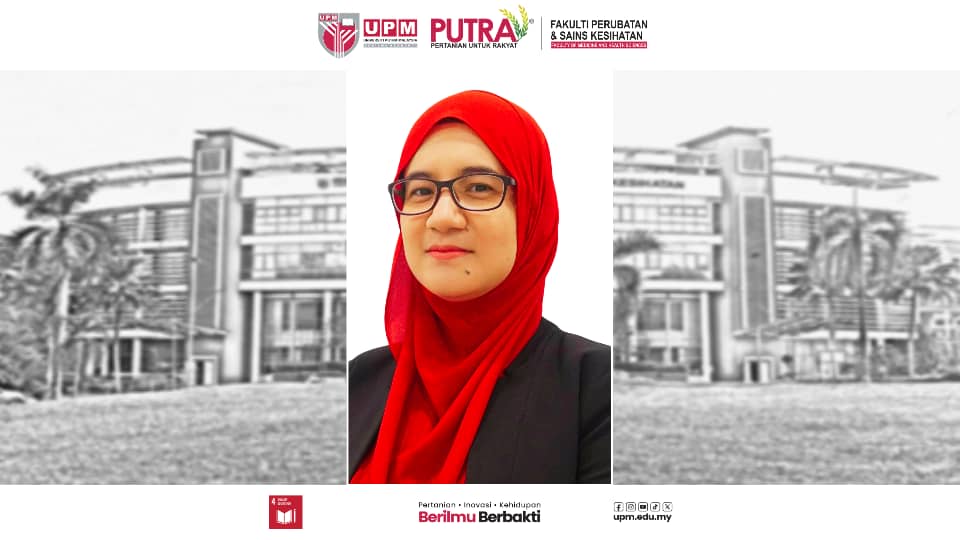
Dr. Felicia Su-Min Hu
Senior Medical Lecturer
Department of Anaesthesia and Intensive Care
Faculty of Medicine and Health Sciences, Universiti Putra Malaysia
Date of Input: 17/09/2024 | Updated: 18/09/2024 | nadia_rahman
MEDIA SHARING





.png)
.png)