The Role of Role Models in Positive Dengue Prevention Behaviour
The history of dengue in our country dates to the early 20th century. Starting as an infection transmitted in urban areas in 1901, dengue subsequently attacked all corners of Peninsular Malaysia. It subsequently remained a major infectious disease after Malaysia was established and recorded several episodes of alarming death tolls. Tracing the infection pattern over the past 20 years, the Health Department and the community as a whole continue to face challenges after challenges to continue to maintain the infection pattern to the lowest possible level.
Dengue infection is closely related to behavioural patterns. If the behaviour in a community is directed towards always maintaining environmental cleanliness, taking the initiative to destroy breeding places and immediately seeking treatment when there is a possibility of infection, it has been found to help reduce the infection rate and subsequently the incident burden in the field.
The long-term effects of immunity levels also play a role. However, due to the changing types of virus strains in Aedes mosquitoes from one season to another, it also has a significant impact on clinical signs and symptoms. However, if positive behavioural patterns to prevent dengue transmission can be maintained, the burden of the outbreak in the field can also theoretically be reduced.
However, based on field experience, as is common in health and medical practice, an intensive campaign has the potential to fade after some time. This is especially true when the number of cases starts to decline, and the epidemic situation returns to normal. In such a situation, prevention campaigns may no longer be seen as a critical priority and there is a tendency for them to be carried out less frequently than when a locality is affected by the epidemic.
Therefore, if this happens, the community's behavioural patterns also seem 'lifeless' and the intensity of its motivation decreases. Therefore, the role of influencers who can raise awareness among the community and frontline health workers must always be promoted. Of course, those who have a trusted background, are well-known and are known to have a good record in the community need to come forward to help in the campaign to maintain positive behaviour towards dengue prevention.
The gotong royong program needs to be routine as a community activity from time to time with appropriate and sufficient allocations. Individuals in the community who are known to be from the leadership ranks also need to take advantage of the space to help foster camaraderie and volunteerism in area cleaning activities and always inject good motivation. The combination of community leaders and social media influencers and famous icons is among the options currently to refresh the spirit among the community to remain in the optimal momentum of disease prevention.
The focus on infection prevention needs to be highlighted through the benefits available on various platforms. It certainly provides multiple returns, not only from the commercial value that is sought after among social media users but also a positive impact towards good health behaviours.
Therefore, in conjunction with Asean Dengue Day on 15 June 2026, role models and influencers are encouraged to join hands in the field to help further invigorate prevention campaigns, especially to foster a positive attitude towards dengue prevention.

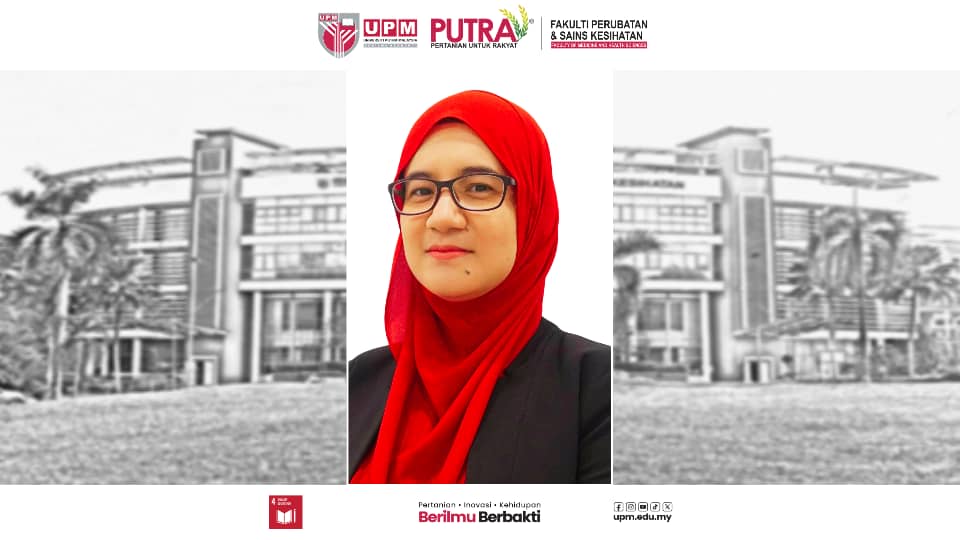
Assoc. Prof Dr. Malina Osman
Department of Community Health
Faculty of Medicine and Health Sciences
Universiti Putra Malaysia
Date of Input: 13/06/2026 | Updated: 14/06/2026 | nadia_rahman
MEDIA SHARING





.png)
.png)