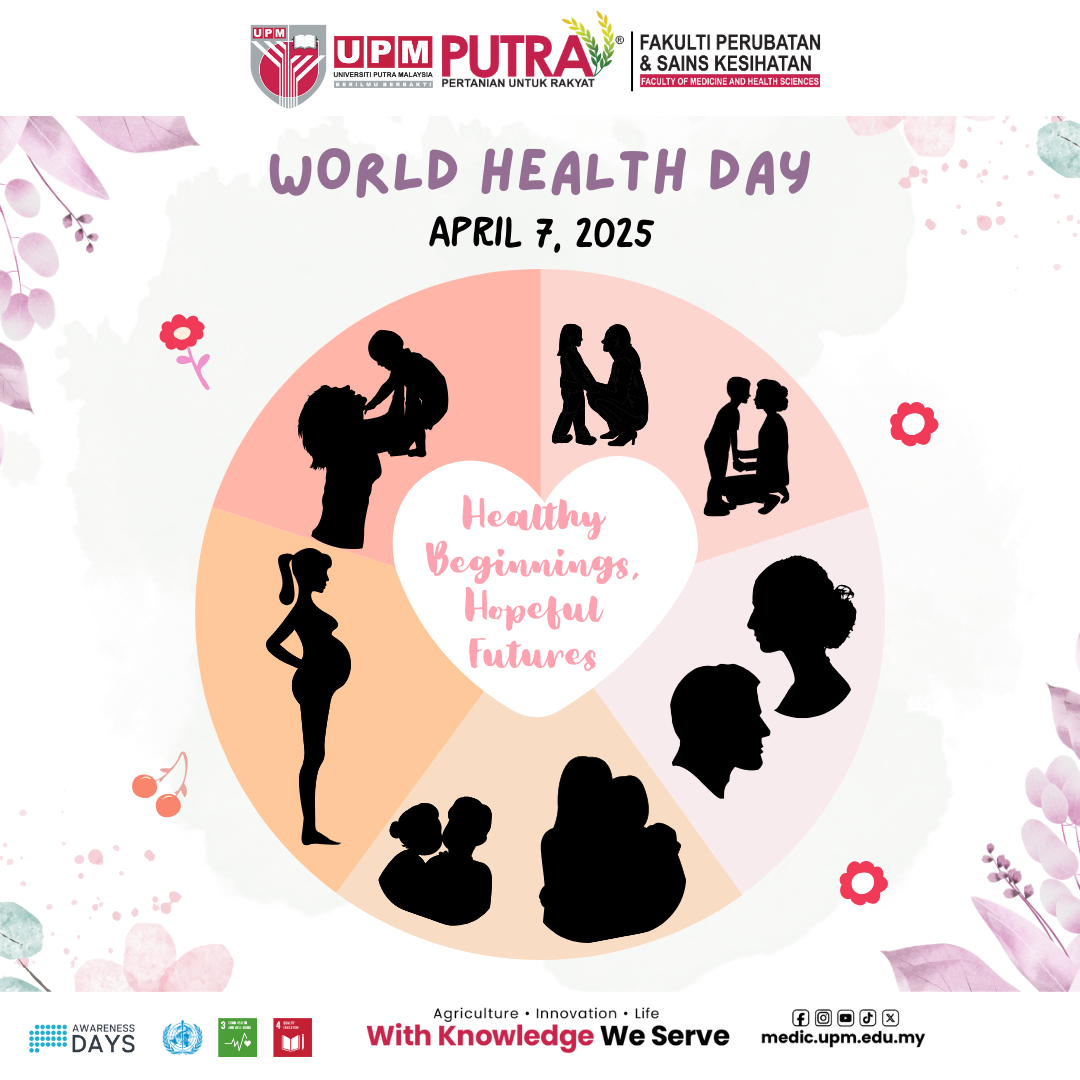
WORLD HEALTH DAY 2025: HEALTHY BEGINNINGS, HOPEFUL FUTURES
World Health Day is celebrated annually on 7th April, commemorating the founding of the World Health Organization (WHO) in 1948. This day is dedicated to raising awareness about critical health issues worldwide and mobilising efforts to address them. The theme for World Health Day 2025, "Healthy Beginnings, Hopeful Futures", emphasizes the efforts to eliminate preventable maternal and infant mortality while also prioritising women’s longer-term health and well-being.
Despite advancements in healthcare and medical technology, maternal and newborn survival remains a global challenge, with significant disparities in healthcare access, quality, and equity. According to the WHO, nearly 300,000 women die each year due to pregnancy or childbirth-related complications. Additionally, over 2 million babies die within their first month of life, and around 2 million more are stillborn, primarily due to inadequate antenatal care.
In Malaysia, maternal and infant health indicators have shown improvements, yet challenges remain. The Department of Statistics Malaysia reported that the maternal mortality ratio (MMR) was 26.0 per 100,000 live births in 2022, slightly improving to 25.7 per 100,000 live births in 2023. These figures indicate a return to pre-pandemic levels, reflecting continued efforts to improve maternal health outcomes. Similarly, the infant mortality rate in Malaysia has been on a declining trend. In 2023, the rate was 6.7 deaths per 1,000 live births, a slight decrease from the previous year. These statistics underscore the importance of sustained efforts to address gaps in maternal and newborn survival.
While maternal and newborn healthcare has improved in recent decades, critical challenges persist, putting the lives of mothers and infants at risk. Limited access to quality maternal healthcare, particularly in rural and underserved areas, prevents many women from receiving essential medical support during pregnancy and childbirth. Preventable maternal and infant fatalities continue to occur due to conditions such as postpartum haemorrhage, infections, and birth complications that could be avoided with timely medical intervention. Healthcare systems tend to focus primarily on childbirth, yet postnatal support remains insufficient, leaving women vulnerable to mental health challenges such as postpartum depression, as well as long-term physical health concerns. Furthermore, socioeconomic gaps, including poverty, education levels, and geographic barriers, exacerbate health inequities, making access to maternal and newborn care more difficult for some women. Addressing these gaps requires a concerted effort from governments, healthcare professionals, educators, and communities to ensure that every mother and child receives the care they need and deserve.
The public plays a vital role in promoting maternal and newborn health through advocacy, awareness, and community engagement. Raising awareness through social media, community initiatives, and workplace discussions can help highlight the importance of safe pregnancy practices, postpartum care, and newborn health. Combating misinformation about maternal and newborn care is essential to ensuring that expectant mothers and families have access to scientifically validated information. Supporting organisations that provide maternal and newborn healthcare services, whether through donations, volunteering, or advocacy, can also drive meaningful change. Encouraging expectant mothers to seek appropriate prenatal and postnatal care, as well as fostering a supportive environment for new parents, helps create a culture where maternal and newborn health is a shared responsibility.
On World Health Day 2025, let us reaffirm our commitment to reducing maternal and newborn mortality and ensuring comprehensive, long-term support for mothers and their babies. By working together with healthcare professionals, educators, policymakers, and communities, we can build a future where every mother and newborn has the opportunity to thrive.

Dr. Siti Khadijah Adam
Senior Lecturer (Pharmacology & Medical Education)
Medical Education Research and Innovation Unit & Pharmacology Unit, Department of Human Anatomy
Faculty of Medicine and Health Sciences
Universiti Putra Malaysia
Date of Input: 28/03/2025 | Updated: 28/03/2025 | nadia_rahman
MEDIA SHARING






.png)
.png)