Leprosy Still Exists: It Is Time to Eliminate Stigma, Not Patients
Every year on 25 January, the world observes World Leprosy Day to raise awareness about a disease that continues to exist but remains widely misunderstood by society.
Although leprosy is often perceived as a disease of the past, the reality is that new cases are still reported in Malaysia and neighbouring countries, particularly among certain vulnerable communities.
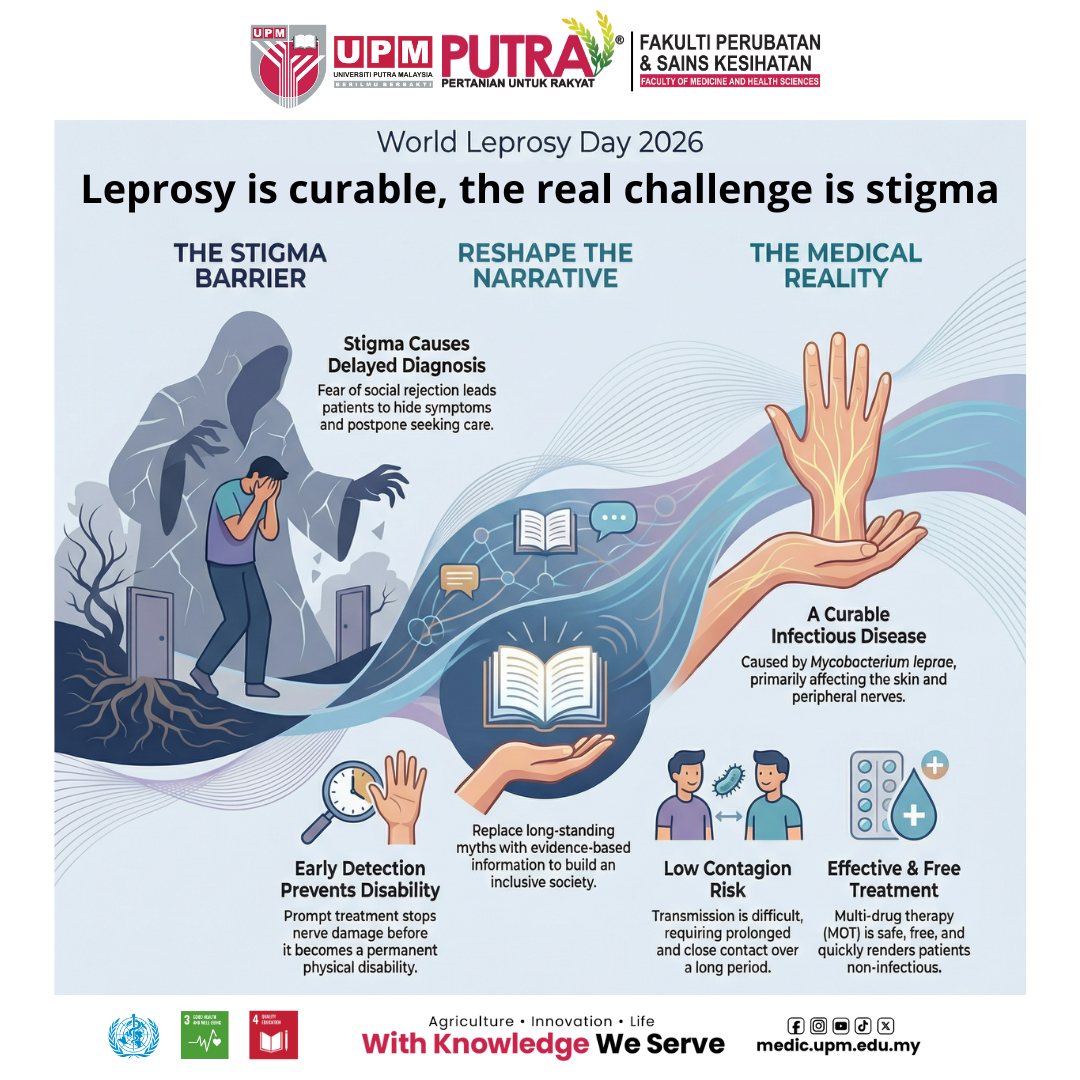
Leprosy is a chronic infectious disease caused by Mycobacterium leprae, primarily affecting the skin and peripheral nerves. Importantly, it is not highly contagious, and transmission requires prolonged and close contact over time.
The greatest challenge in leprosy management today is no longer the lack of effective treatment, but delayed diagnosis due to fear, stigma, and misinformation. Many patients postpone seeking medical care because of concerns about social rejection and discrimination.
Clinically, leprosy may present as numb skin patches, altered skin pigmentation, or muscle weakness. When detected early, treatment can be initiated promptly, preventing permanent nerve damage and physical disability.
Modern leprosy treatment is effective, safe, and freely available, using multi-drug therapy (MDT) provided through public healthcare systems. Patients who receive appropriate treatment rapidly become non-infectious, allowing them to continue their daily lives safely.
Despite this, the psychosocial burden of leprosy often outweighs the medical impact of the disease itself. Stigma leads to concealment of symptoms, delayed treatment, social isolation, and reduced employment opportunities.
As a society, we must reshape the narrative surrounding leprosy. Leprosy is not a punishment, not a hereditary disease, and not a result of poor hygiene. It is a medical condition that is fully treatable when diagnosed early.
Healthcare professionals, particularly in dermatology and primary care, play a critical role in early recognition, timely referral, and patient education. Public health education must also focus on delivering evidence-based information to replace long-standing myths.
On this World Leprosy Day, the key message is clear: eliminate stigma, strengthen support, and improve awareness. Through knowledge, compassion, and collective responsibility, we can protect both public health and human dignity.
Ultimately, success in leprosy control should not be measured solely by declining case numbers, but by our ability to build a society that is inclusive, informed, and humane.

Dr. How Kang Nien
Consultant Dermatologist & Dermatologic Surgeon
Department of Dermatology,
Faculty of Medicine and Health Sciences,
Universiti Putra Malaysia
Date of Input: 25/01/2026 | Updated: 04/02/2026 | nadia_rahman
MEDIA SHARING






.png)
.png)